
Last Updated: June 2026
Quick Answer: The most common sign you need a root canal is a persistent, severe toothache, especially when chewing or applying pressure. If you experience this along with gum swelling or a pimple on the gums near the painful tooth, you should contact a Guelph dentist immediately. According to the Canadian Dental Association, millions of teeth are treated and saved each year with root canal, or endodontic, treatment.
Ignoring a severe toothache is not just difficult; it can be detrimental to your overall health. That deep, throbbing pain is often your body’s way of signalling a serious problem inside your tooth—an infection of the dental pulp. A root canal treatment is designed to relieve that pain and, most importantly, save your natural tooth. At Dentistry on Guelph, we understand the anxiety that can come with dental pain, and our goal is to provide a clear path to relief and recovery.
Led by Dr. Reza Shahhaidari, a member of the Ontario Dental Association (ODA) with over 25 years of experience, our team is here to make the process as comfortable as possible. We focus on explaining every step, ensuring you feel in control and confident in your care. A root canal is a routine, pain-relieving procedure that removes the infected tissue, cleans the inside of the tooth, and seals it to prevent future problems. It’s a way to stop the infection from spreading and avoid the need for an extraction.
Understanding the Need for a Root Canal
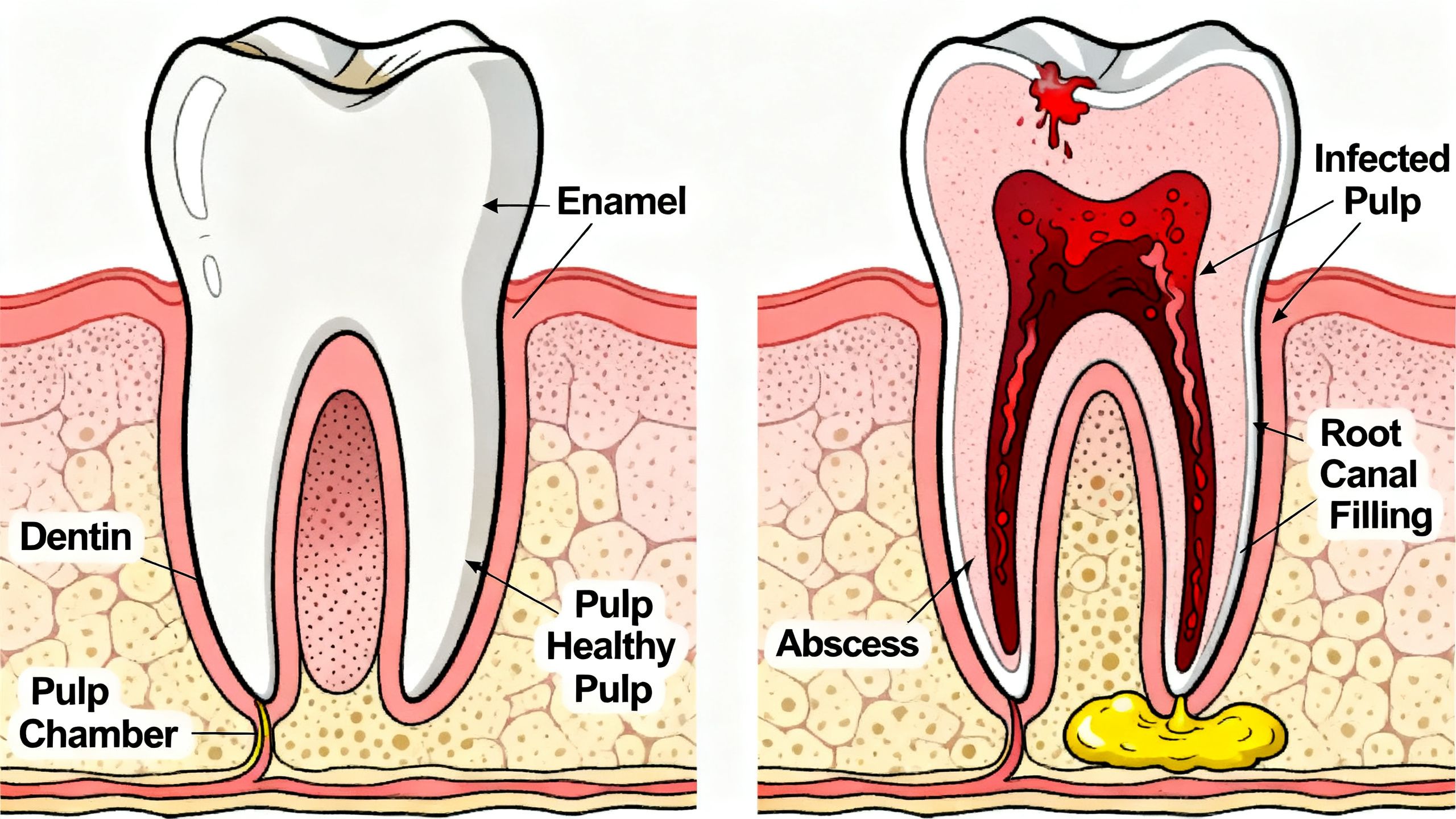
A root canal, clinically known as endodontic therapy, becomes necessary when the soft tissue inside your tooth’s root canal—the pulp—becomes inflamed or infected. The pulp contains nerves, blood vessels, and connective tissue, which are vital during a tooth’s development. However, once a tooth is fully mature, it can survive without the pulp because the surrounding tissues continue to nourish it. An infection in the pulp can be caused by deep decay, repeated dental procedures on a tooth, a crack or chip in the tooth, or trauma.
If left untreated, the infection can spread beyond the root tip, leading to a painful abscess. This is a pus-filled pocket that forms at the end of the tooth’s root. An abscess can cause damage to the bone surrounding the tooth, leading to bone loss and eventually tooth loss. The infection can even spread to other parts of your body, creating more significant health issues. The purpose of a root canal is to remove the infected pulp, carefully clean and disinfect the inside of the tooth, then fill and seal it. The procedure doesn’t just alleviate pain; it saves your natural tooth and protects your overall health.
7 Telltale Signs You Might Need a Root Canal in Guelph
Recognizing the symptoms of an infected tooth pulp is the first step toward getting the treatment you need. While only a dental professional can definitively diagnose the need for a root canal, these seven signs are strong indicators that you should book an appointment with your Guelph dentist.
1. Persistent and Severe Tooth Pain
This isn’t a minor ache that comes and goes. The pain from an infected pulp is often a deep, throbbing, and continuous pain that can make it difficult to eat, sleep, or concentrate. It may feel like it’s radiating to your jaw, ear, or other teeth on the same side. The pain is caused by the infection putting pressure on the nerves inside the tooth and in the surrounding tissues.
2. Prolonged Sensitivity to Hot and Cold
While many people have sensitive teeth, the sensitivity associated with a needed root canal is different. The pain from contact with hot or cold liquids or foods often lingers for 30 seconds or more, even after the stimulus is removed. This indicates that the nerves in the pulp are damaged and reacting abnormally.
3. Swollen Gums
The infection inside your tooth can cause inflammation in the surrounding gum tissue. You might notice that the gums near the painful tooth are red, swollen, and tender to the touch. This swelling is a direct result of the infection trying to find a way to drain.
4. A Pimple on the Gums (Dental Fistula)
Sometimes, the infection creates a small, pimple-like bump on the gum near the tooth’s root. This is called a fistula or gum boil. It’s a channel created by the body to drain the pus from the abscess at the root tip. While it might temporarily relieve pressure and pain, it’s a clear sign of a persistent infection that requires professional treatment.
5. Tooth Discolouration
An infection can damage the pulp and blood supply to the tooth, causing it to darken. If you notice one of your teeth turning grey, black, or a dark brownish colour, it could be a sign that the nerve inside is dying or has died. This is a significant indicator that the tooth’s internal structure is compromised.
6. Pain When Chewing or Touching the Tooth
If your tooth is extremely sensitive to touch or hurts when you bite down, it’s often a sign of severe decay or nerve damage. The ligament surrounding the tooth root can become inflamed and hypersensitive due to the infection, making any pressure on the tooth painful.
7. A Chipped or Cracked Tooth
A deep crack or chip can act as a direct pathway for bacteria to enter the pulp chamber, leading to infection. Even if the trauma happened long ago, bacteria can slowly work their way into the tooth’s core. Any significant trauma to a tooth warrants a dental check-up to ensure the pulp hasn’t been compromised. In a dental emergency, such as a knocked-out tooth, immediate action is crucial; you can learn more about what to do by visiting our page on General Dentistry.
The Root Canal Procedure at Dentistry on Guelph: A Step-by-Step Guide
Knowing what to expect can significantly reduce anxiety about a dental procedure. At our Guelph clinic, Dr. Shahhaidari and our team prioritize patient comfort and clear communication. Here’s what a typical root canal treatment involves:
- Consultation and X-ray: The first step is a thorough examination. We’ll take digital X-rays to see the shape of the root canals and determine the extent of the infection in the surrounding bone.
- Local Anaesthesia: We completely numb the tooth and the surrounding area. Our primary goal is to ensure you are comfortable and feel no pain during the procedure.
- Placing the Dental Dam: A small sheet of rubber, called a dental dam, is placed around the tooth. This isolates the tooth, keeping it clean and dry from saliva during the treatment.
- Cleaning the Root Canal: Dr. Shahhaidari will make a small opening in the crown of the tooth to access the pulp chamber. Using very small instruments, the infected or inflamed pulp is removed. The inside of the tooth is then carefully cleaned, shaped, and disinfected.
- Filling the Canal: After the space is cleaned and dried, it’s filled with a biocompatible, rubber-like material called gutta-percha. This material, along with an adhesive cement, completely seals the root canals to prevent bacteria from re-entering.
- Placing a Crown or Filling: In most cases, a tooth that has had a root canal will need a crown to protect it from fracturing and restore it to full function. A root canal can make a tooth more brittle over time. The crown acts as a helmet, protecting the underlying structure. This final restoration is crucial for the long-term success of the treatment and is a key part of what makes a dentist one of the best cosmetic dentists in Guelph.
Cost of a Root Canal in Guelph and Financial Options
The cost of a root canal in Guelph can vary significantly based on the complexity of the case and which tooth is affected. Molars, with multiple canals, are generally more complex and costly to treat than front teeth, which typically have only one canal. On average, the cost can range from $900 to over $2,500. This fee does not typically include the final restoration, such as the dental crown, which is also essential for the tooth’s longevity.
At Dentistry on Guelph, we believe in transparent pricing. During your consultation, we will provide a detailed treatment plan with a precise cost estimate. We are a registered provider for the Canadian Dental Care Plan (CDCP), and we offer a free first appointment for eligible patients. We also provide direct electronic billing to most major insurance providers to simplify the financial process for you. Our administrative team is skilled at helping patients understand and maximize their benefits. For more complex restorations like implants, which are an alternative to saving a tooth, you can explore our page on additional dental services.
Choosing the Right Dentist for Your Root Canal in Guelph
When you’re in pain, you need a dental team you can trust. Look for a clinic with a proven track record, verifiable patient reviews, and experienced practitioners. Dentistry on Guelph is proud of our 4.9-star Google rating from over 200 verified patient reviews. Our lead dentist, Dr. Reza Shahhaidari, is an active member of both the Ontario Dental Association (ODA) and the Royal College of Dental Surgeons of Ontario (RCDSO), bringing over 25 years of global experience to his practice in Guelph.
We understand that dental emergencies don’t always happen during business hours. That’s why we offer convenient evening hours until 7:00 PM on weekdays and are open on Saturdays from 9:00 AM to 4:00 PM. We also accommodate walk-in and same-day emergency appointments to provide care when you need it most. Our clinic at 380 Eramosa Rd offers free parking, and our multilingual staff is ready to assist you. We are committed to making high-quality dental care accessible and stress-free.
Frequently Asked Questions
1. Is a root canal painful?
With modern anaesthetics and techniques, a root canal is typically no more uncomfortable than getting a regular filling. The procedure is designed to relieve the severe pain caused by the infection, and most patients report feeling significantly better afterward.
2. How long does a root canal take?
A root canal procedure can usually be completed in one or two appointments, depending on the complexity of the tooth and the extent of the infection. Each appointment typically lasts between 60 to 90 minutes.
3. What is the recovery like after a root canal?
For the first few days after treatment, your tooth may feel sensitive, especially if there was pain or infection before the procedure. This discomfort can usually be managed with over-the-counter pain medications. It’s best to avoid chewing on the treated tooth until it is fully restored with a permanent filling or crown.
4. Can I just take antibiotics instead of getting a root canal?
Antibiotics can help control the infection in the short term, but they cannot cure it. The medication cannot reach the source of the infection inside the tooth. A root canal is necessary to physically remove the infected tissue and prevent the infection from returning.
5. How long does a tooth last after a root canal?
With a proper restoration (like a crown) and good oral hygiene, a tooth treated with a root canal can last a lifetime. The success rate for root canal therapy is very high, and the procedure is designed to save your natural tooth for years to come.
6. What is the alternative to a root canal?
The only alternative to a root canal is to have the tooth extracted. However, removing a natural tooth can cause surrounding teeth to shift, leading to bite problems. Replacing the tooth with a bridge, partial denture, or dental implant is often more costly and complex than saving it with a root canal.
Final Recommendation
If you are experiencing any of the signs discussed, particularly persistent, severe tooth pain, do not wait for it to get worse. An infected tooth will not heal on its own, and delaying treatment can lead to more complex problems, including abscess, bone loss, or the need for an extraction. The most effective and proactive step you can take is to schedule a dental consultation for a proper diagnosis.
A root canal is a safe, effective, and pain-relieving procedure designed to save your natural tooth. At Dentistry on Guelph, we recommend addressing the issue promptly. Our experienced team, led by Dr. Reza Shahhaidari, will provide a thorough assessment and a clear, personalized treatment plan to restore your oral health and eliminate your pain.
Book Your Appointment Online
Take the first step towards relief. Schedule your consultation today by visiting our website at https://dentistryonguelph.com/online-appointment or by calling our friendly team at (226) 541-5050.
About the Author
Dr. Reza Shahhaidari, DDS, is the Lead Dentist at Dentistry on Guelph. A dedicated member of the Ontario Dental Association with over 25 years of global dental experience. Known for his calm, patient-first approach—combining clinical efficiency with a gentle touch for a stress-free experience.
Follow us for more dental tips and clinic updates:
Instagram | Facebook | About Us
Produced by: CiCon Marketing in collaboration with Dentistry on Guelph.
Dental Disclaimer: This article is intended strictly for general informational purposes and should not be construed as a substitute for professional dental advice or diagnosis. It is imperative that you consult with your qualified dentist or dental healthcare provider to obtain precise cost estimates, discuss your specific treatment options, and receive personalised care tailored to your individual needs and oral health condition.
CDCP Note: Coverage details may vary. Contact your dental office or visit Canada.ca/dental for the most current information.


